The bathroom has quietly become the most design-forward room in the house. What used to be purely functional is now a space homeowners across Vancouver Island are investing in — and in 2026, the trends defining beautiful bathrooms all point in the same direction: seamless, natural, and low-maintenance.
At Coastal Cement Studio, we're seeing these shifts firsthand in homes across Nanaimo, Victoria, Parksville, and the wider island. Here's what's defining bathroom design this year — and why microcement is the material making it all possible.
1. The Death of Grout Lines
One visible bathroom-design direction in 2026 is a quieter material palette with fewer visual breaks. Tile remains a practical option; continuous finishes offer a different look and have their own specification and maintenance requirements.
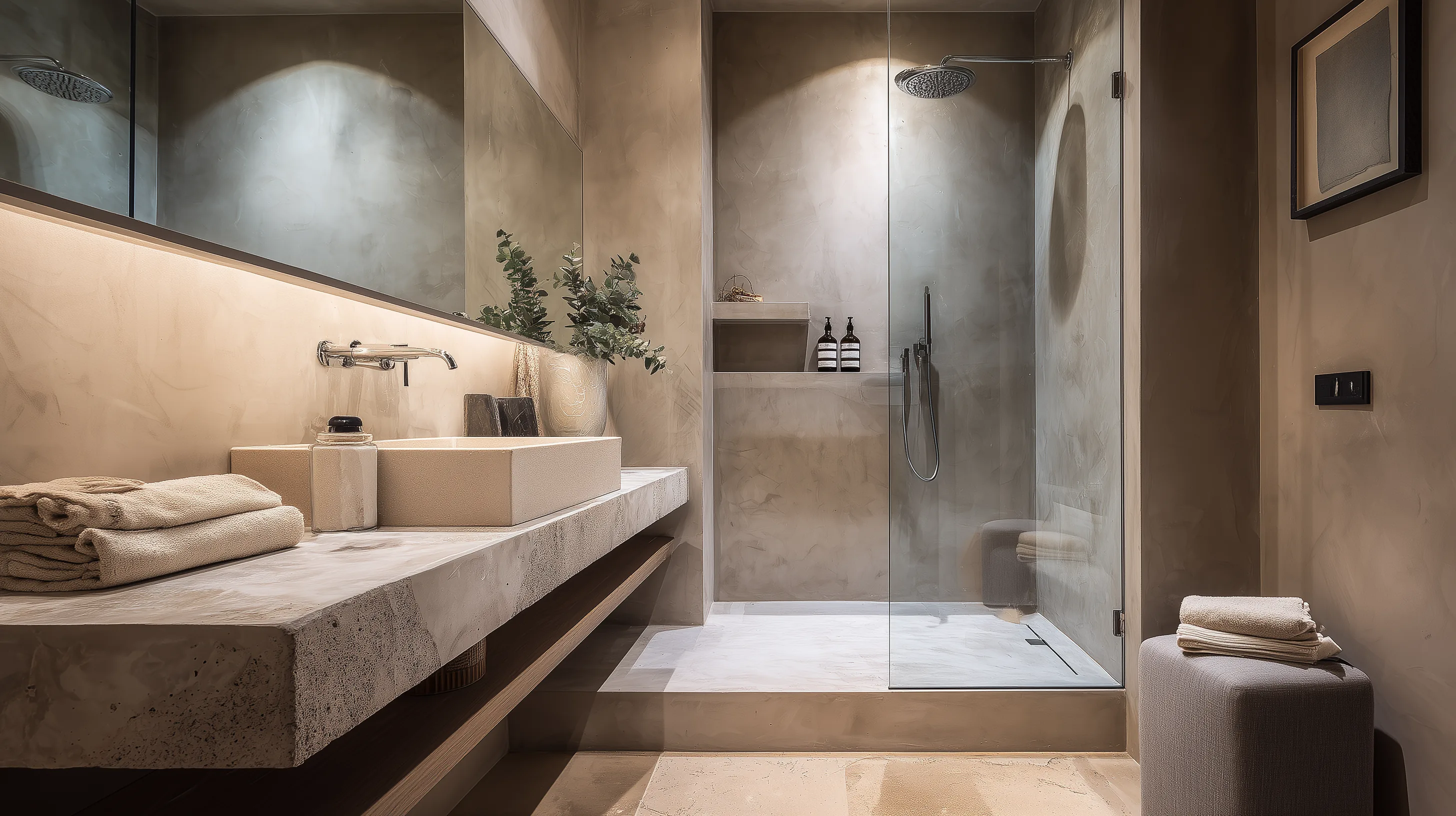
Microcement can support that direction. On suitable surfaces, it can create a continuous visible finish with fewer conventional grout joints. Cleaning and maintenance still depend on texture, sealer, water exposure, detailing, and the selected system.
Whether you're renovating a compact ensuite in Nanaimo or a large master bathroom in Victoria, the shift to seamless surfaces is one of the most impactful design moves you can make in 2026.
2. Warm Neutrals & Earthy Tones
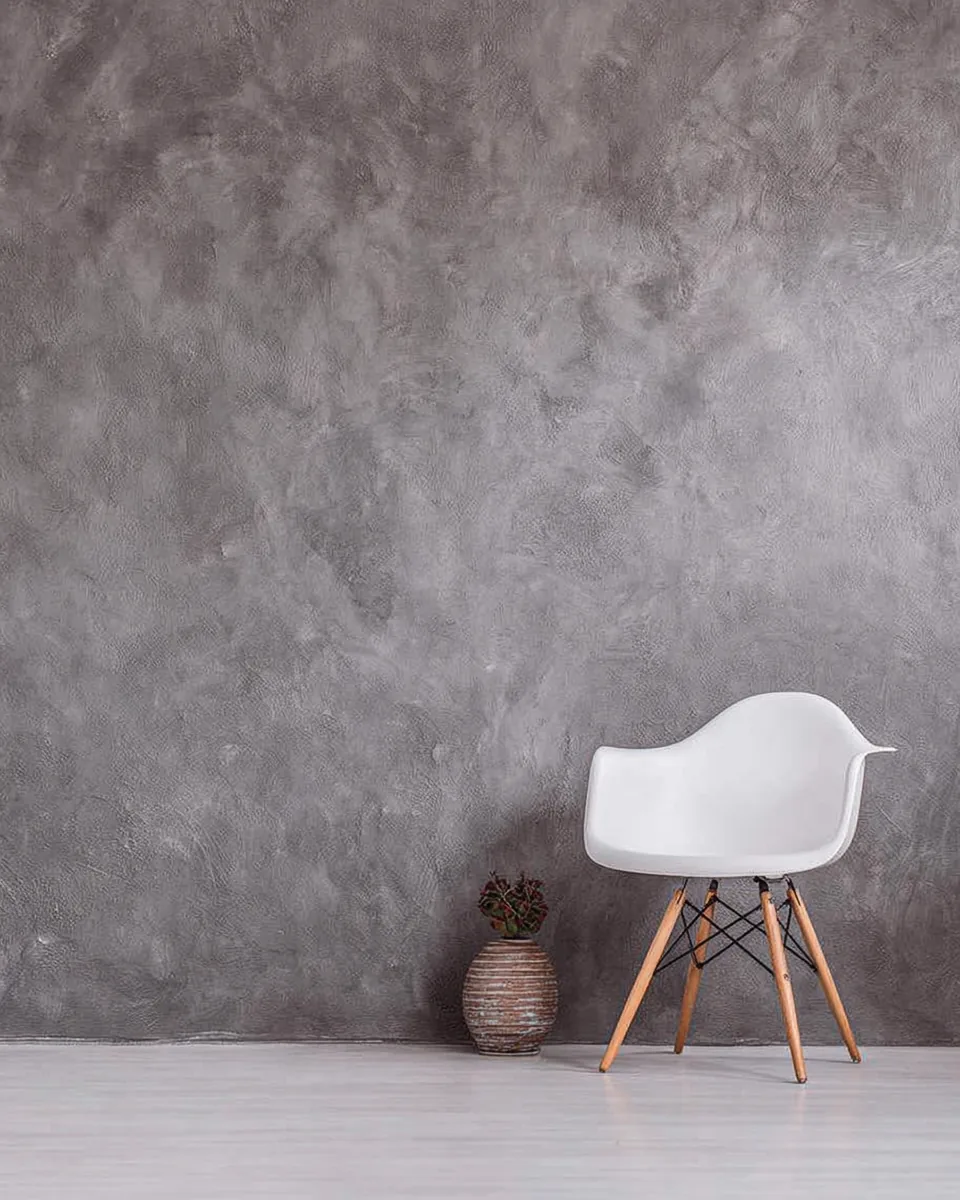
Stark white bathrooms are giving way to warmer, earthier colour palettes this year. Think warm greige, sandy taupe, terracotta-tinged beige, dusty sage, and soft clay — colours that feel grounded, calming, and deeply connected to the natural world.
This trend feels especially natural on Vancouver Island, where the landscape itself — ocean, stone, driftwood, moss — provides the perfect colour reference.
Microcement is inherently suited to this palette. It's available in a wide range of warm neutral tones and takes on a unique organic depth that paint or tile simply can't replicate. The material itself has warmth and texture baked into it — especially in satin and natural matt finishes that catch light beautifully throughout the day.
3. Spa-Inspired Minimalism
The spa bathroom aesthetic has been building for years, but in 2026 it's fully mainstream. Homeowners want their bathrooms to feel like a retreat — serene, uncluttered, and tactile. Clean lines, hidden storage, minimal hardware, and surfaces that recede rather than compete for attention.
Microcement is one way to create a visually quiet, continuous finish. Wall and floor coordination can be explored through samples, while wet-room construction, drains, movement, transitions, and waterproofing remain separate project requirements.
For a spa-inspired bathroom concept, microcement can support a quiet, continuous design direction when the complete assembly, selected product system, and project scope are suitable.
4. Tactile, Textured Surfaces
Smooth and shiny is out. In 2026, texture is everything. Matte, tactile, layered surfaces are dominating bathroom design — finishes that invite touch, engage multiple senses, and create depth without visual noise.
This is where microcement really shines. Unlike tile, which delivers the same flat surface regardless of finish, microcement carries natural trowel variation and a handcrafted quality that makes every application unique. Choose a fine sand texture for bathroom floors — providing the grip you need in wet areas — or an organic rustic finish on a feature wall for a surface that genuinely looks like it belongs in a high-end design hotel.
The texture you choose for your Vancouver Island bathroom tells a story. We help you choose the right one.
5. Sustainable & Renovation-Friendly Materials
Homeowners in 2026 are increasingly conscious of renovation waste — and rightly so. Demolishing perfectly functional tile to start fresh generates enormous amounts of material that ends up in landfill. There's growing demand for renovation approaches that are beautiful and responsible.
Because microcement is applied in thin layers, it may reduce demolition and disposal when an existing surface is suitable for an overlay. That is project-specific: unstable, wet, damaged, incompatible, or poorly bonded assemblies may still require removal or repair. Environmental comparisons also depend on product choice, transport, preparation, maintenance, and service life.
For Vancouver Island homeowners who care about their environmental footprint as much as their aesthetic, microcement is an easy choice.
Why Coastal Cement Studio for Your 2026 Bathroom Renovation
Coastal Cement Studio reviews Vancouver Island bathroom inquiries individually. Location, substrate, waterproofing responsibilities, movement, drains, transitions, ventilation, finish system, other trades, and schedule all need to be defined before a project is accepted.
Physical samples can help compare texture and colour in the room's actual light. Availability, travel, sample options, preparation, other-trade responsibilities, and final sealing are confirmed in the written scope.
Fewer grout lines, conditional overlay options, and a finish selected through project-specific review.