If you're renovating a bathroom, updating your floors, or planning a new build on Vancouver Island, you've probably come across two very different options: classic ceramic or porcelain tile, and the newer seamless alternative, microcement. Both can look stunning. Both can handle water. But they deliver very different results — and one tends to suit the coastal BC lifestyle a lot better than the other.
Here's an honest, detailed comparison to help you decide.
What Is Microcement?
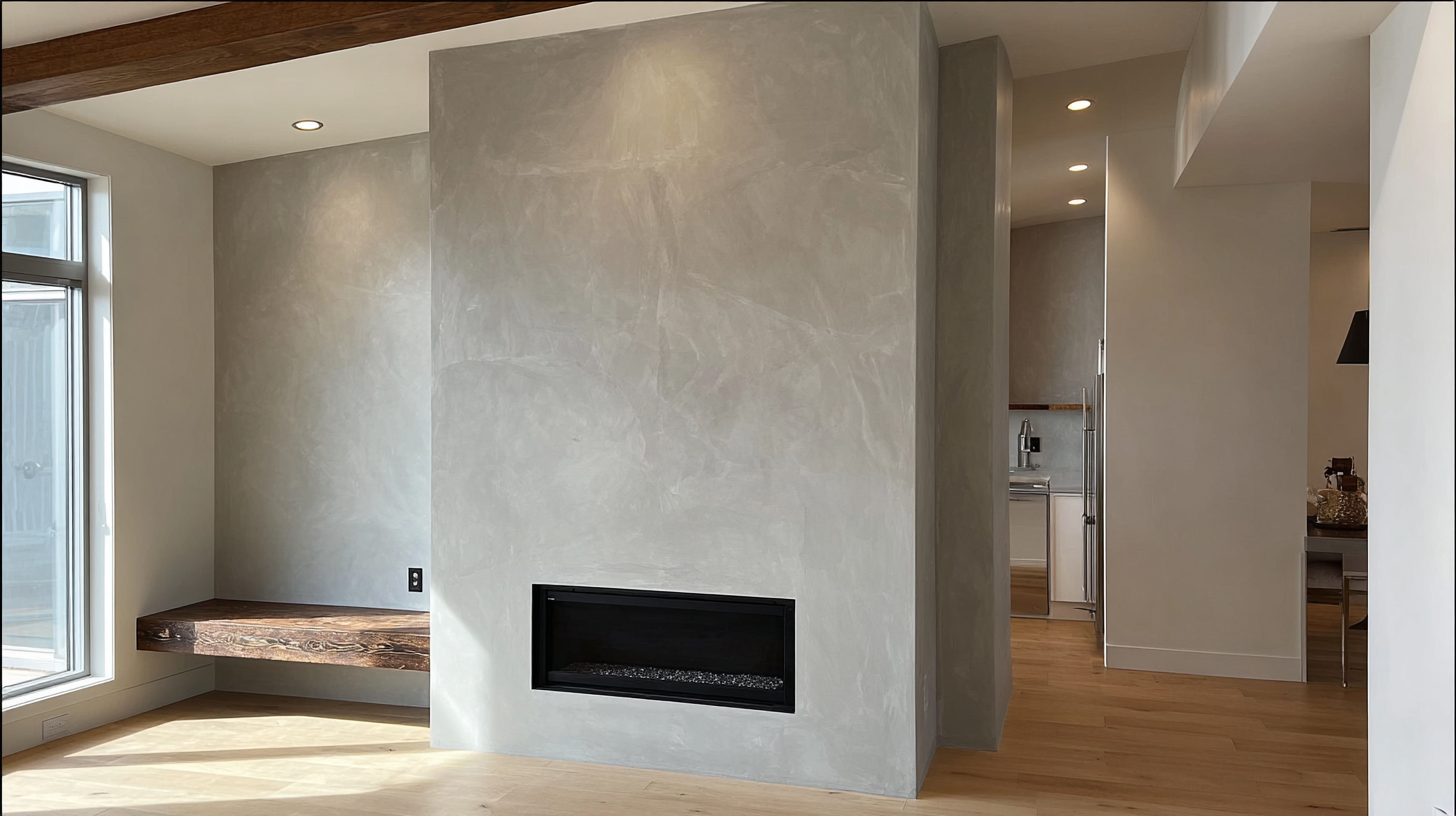
Microcement is a thin, cement-based coating reinforced with polymers and colour pigments. Applied by hand in multiple thin layers, it cures into a continuous, grout-free surface that can go over almost any existing substrate — including tile, concrete, and plywood. The finished result looks like polished concrete or natural stone, but at just 2–3mm thick, it adds virtually no height to your existing floors or walls.
It's become increasingly popular in Vancouver Island homes for its clean, modern coastal aesthetic — and because it eliminates the grout that BC's humidity can make such a nightmare.
Head-to-Head: Microcement vs Tile
1. Appearance & Aesthetic
Tile comes in thousands of patterns, sizes and colours. If you want a Victorian checkerboard, a bold Moroccan mosaic, or large-format marble-look porcelain, tile is the only way to achieve that level of geometric variety.
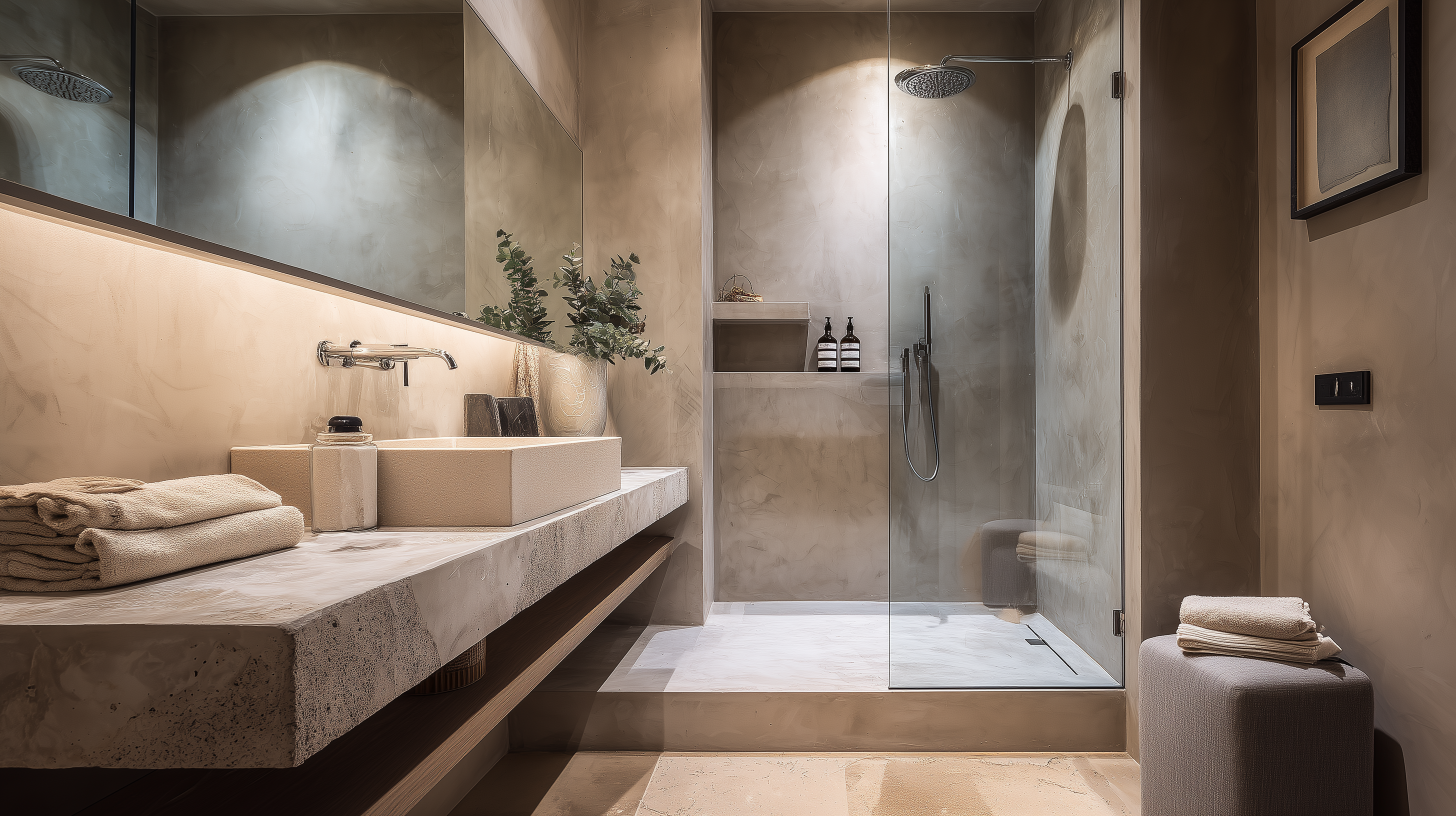
Microcement offers something tile fundamentally cannot: a completely uninterrupted surface. No grout lines, no visual breaks, no pattern repetition. The result is a calm, spa-like, and contemporary feel that suits the organic modern and coastal minimalist interiors that are so popular on Vancouver Island right now. It flows seamlessly from floor to wall, room to room — giving small microcement bathrooms in particular a much more spacious, open look.
Winner for modern/coastal aesthetics: Microcement. Winner for patterns and traditional looks: Tile.
2. Waterproofing & Performance in Wet Areas
Both materials can handle water, but they do it differently. Tile itself is waterproof — but the grout between tiles is not. Grout is porous, and in the wet, humid conditions of Vancouver Island, it absorbs moisture over time. This leads to discoloration, soap scum buildup, mould growth, and eventually cracking.
Properly installed microcement creates a fully sealed, joint-free surface with no entry points for water at all. Think of it like tiling the entire room in one seamless piece. As long as the sealer is maintained, there are no vulnerability points.
Winner for wet areas & showers: Microcement — no grout means no mould, no resealing, no water ingress.
3. Maintenance & Cleaning
This is where the difference is most felt day-to-day. Tile grout lines are magnets for soap residue, hard water scale, and mildew — especially in showers. Keeping them white requires scrubbing with a brush, which is time-consuming and often futile against BC's hard water.
Microcement has nowhere for dirt or bacteria to hide. A quick wipe with a pH-neutral cleaner is all it takes. No grout sealing, no toothbrush scrubbing, no harsh chemicals.
Winner for easy maintenance: Microcement — significantly less cleaning effort over time.
4. Installation & Renovation
Standard tile installation means demolition: ripping out the old floor or wall covering, disposing of it, preparing the substrate, then tiling, grouting, and waiting for it to cure. It's messy, time-consuming, and produces a lot of waste.
One of microcement's most significant advantages is that it can be applied directly over your existing tile, concrete, or plywood — no demolition required. This means less mess, lower disposal costs, faster turnaround, and no need to temporarily gut your bathroom.
Winner for renovations: Microcement — no demolition saves time, money, and a huge amount of disruption.
5. Durability & Longevity
Both are highly durable. Tile is extremely scratch-resistant and hard — but individual tiles can crack under point impact (dropping something heavy), and once a tile cracks, matching it later can be nearly impossible. Grout also deteriorates over 5–10 years and needs periodic maintenance.
Microcement is flexible, so it resists the minor structural movement that can crack rigid tiles. It won't develop grout-line failures. The main maintenance requirement is resealing every few years — a straightforward process that refreshes the surface and extends its life significantly.
Durability: Both are long-lasting. Microcement ages more gracefully with fewer maintenance interventions.
6. Cost
Standard tile is generally less expensive upfront. However, when you factor in the cost of demolition (tearing out old tile), disposal fees, longer labour time, and the ongoing cost of grout maintenance and eventual re-grouting, the gap narrows considerably.
Microcement has a higher per-square-foot installation cost, but the savings on demolition, the speed of installation, and the reduced long-term maintenance often make it the more cost-effective choice overall — especially for renovation projects where demolition costs can be significant.
Budget tip: If you're renovating over existing tile, microcement often costs less in total than a full tile replacement.
Quick Comparison Summary
| Feature | Microcement | Tile |
|---|---|---|
| Grout lines | None — fully seamless | Yes — require ongoing maintenance |
| Waterproofing | Fully sealed surface | Tile yes, grout no |
| Maintenance | Wipe clean, reseal every few years | Regular grout scrubbing & sealing |
| Renovation | Over existing surfaces — no demo | Requires demolition |
| Aesthetic | Modern, seamless, spa-like | Wide pattern variety |
| Best for | Coastal/modern BC homes | Traditional or patterned looks |
Which Is Right for Your Vancouver Island Home?
Choose microcement if you:
- Want a seamless, modern or coastal minimalist aesthetic
- Are renovating and want to avoid demolition costs and mess
- Have a shower or wet room and hate cleaning grout
- Want flooring that flows continuously from room to room
- Value low-maintenance surfaces that age gracefully
Choose tile if you:
- Want geometric patterns, mosaics, or a traditional look
- Are working with a very tight budget on a straightforward new installation
- Want maximum scratch resistance in high-traffic non-wet areas
Ready to Explore Microcement for Your Home?
Coastal Cement Studio specializes in premium microcement installations across Vancouver Island — from Victoria and Sidney to Nanaimo, Parksville, and Campbell River. We work with homeowners to create seamless, waterproof surfaces perfectly suited to BC's coastal climate.
Or call us at (587) 436-0799